
The Centre County intergovernmental solar project falls to the war on clean energy. But its potential is very much alive.
Even though it will not be completed, the cause remains. Public opinion on solar and climate change as well as rising prices and budget stress will demand ingenuity. We are prepared.

On Friday, 10 local governments met to end the intergovernmental solar power purchase agreement I catalyzed. After almost seven years of painstaking work by numerous public servants, solicitors, lawyers, and energy professionals, it became a casualty of the MAGA war on clean energy. Excellent organization, strongly favorable public opinion, and common sense did not stop Trump, Congress, and Project 2025. And yet, I am more heartened by the outcome than I am saddened.
The intergovernmental solar power purchase agreement (SPPA) was designed to provide stable and affordable solar power to our local governments from a Pennsylvania company. It was also intended to increase coordination and collaboration among local governments. It generated enough interest in electricity that it created new conversations about solar, energy efficiency, and carbon emissions reduction than ever before. For the State College Area School District where I served for four years (I did not seek reelection), it opened the possibility of developing solar and energy education in new and exciting ways. Finally, it created new relationships, making way for increased regional development, land use discussion, and even relationships to our neighbors.
This project would have been the first of its kind in Pennsylvania. In fact, it was among the first of its kind in the country. In 2020, the SPPA working group were invited to be part of a leadership cohort with the World Resources Institute and Rocky Mountain Institute, both organizations at the vanguard of climate and clean energy. We were alerted that we would be awarded the PA Solar Center’s Lodestar Award and featured in a World Resources Institute leadership video. We declined both. The project was not complete.
But why were we included in these potential honors? Because we realized something others hadn’t: If you aggregate enough electricity demand among local governments, you can achieve a price point that beats the dirty grid, protects you from price volatility, combats climate change, and builds cooperation at a time of incredible polarization.
For us, the zero-carbon generation would help meet carbon goals in the Centre Region Council of Governments Climate Action and Adaptation Plan as well as resolutions from Ferguson, Harris, and Patton Townships, and the State College Borough. It would also meet the visions of the Community and Environmental Bills of Rights for Ferguson Township and the State College Borough. Contracts were finalized in mid-2025.
You can read about the challenges that Executive Orders, tariffs, changes at the Treasury, and H.R.1 created in The Centre Daily Times and State College dot Com. Randy Brown, the State College Area School District’s Finance Director, said, “Following these discussions and a review of the proposed terms, the participating organizations determined the project could not proceed under the revised terms. These new terms no longer align with the project’s original goals of long-term cost stability and fiscal responsibility for stakeholders in Centre County. Collectively, we are disappointed by this outcome[.]” I will say what I said above: it is a casualty of the MAGA war on clean energy. This project would be one of thousands of projects going forward if things were different. But they aren’t.
There have been “critics” of the project for the last two years. I put “critics” in scare quotes because, as former State College Area School District Board President and current member Amy Bader said, they have “outlier syndrome.” These folks are a never-ending stream of conspiracies, fallacies, and imaginary enemies. They have been impervious to reason and evidence, moved the goalposts, misrepresented facts, promised to uncover facts that don’t exist, personally attacked public servants (including me), misrepresented themselves and their relationships, pretended to be energy experts, and weaponized Right to Know requests. They take playbooks from reactionary politicians and astroturf campaigns to manufacture controversies and monger doubt. They have used a local call-in gossip radio show hosted by Representative Scott Conklin’s Chief of Staff, Tor McCartney (“Tor Michaels”), and his Facebook page as their main platform. Friday’s meeting and stories featured some of these characters.
I will not address all comments. Some were vague, fact-free, or conspiratorial.
I’ll focus on Josh Portney’s and Robert Zeigler’s words. Over the last two years, Portney and Zeigler have appeared on McCartney’s dozens of times. The number of times they have said factually wrong things about the project is too numerous to deal with. Their statements from Friday will have to suffice.
Until recently, Portney was on the State College Borough Council. He was also employed in Representative Scott Conklin’s (Democrat, HD-77) office where he reported to McCartney. They have also been paid staff on Conklin’s re-election campaigns according to Department of State Campaign Finance records. A review of months of Portney’s calls into the show they routinely omitted the nature of their relationship. The use of undisclosed relationships by a public servant on a for-profit radio program is a conflict of interest.
On Friday, Portney made two claims that merit a rebuttal, one about unstated risks and another about State College Borough’s lack of action. Portney alleged we did not disclose a risk to the public: the possibility that the entire regulatory, renewable energy certificate, and 30+ year tax incentive framework would be attacked by the President of the United States and Congress. Color the energy services professionals and me naive if you want to. But why would you bet that in three years that the entire solar market would be upended because the President would try gut the fastest-growing part of the economy, one that disproportionately benefitted his own party’s districts by a 5:3 margin, lose a net $22 billion in investment, and 15,000 jobs according to E2?
But just so Portney and you know: we talked about “Black Swan events.” By their nature, Black Swan events are catastrophic and unpredictable. In hindsight, some might say we knew Trump would attack solar energy. Sure. But he wasn’t the president during most of this project. And even when he was late in his first term, he and Congress left the solar tax credits alone.
Versions of the investment tax credit have been around since 1978 and versions of the production tax credit have been around since 1992. While up and down, there have been sunset dates and step-down provisions. The Inflation Reduction Act (IRA) passed under the Biden Administration created a stable investment environment for solar energy until 2032. In 2024, eighteen Republican representatives signed a letter encouraging Speaker of the House Mike Johnson to retain the IRA tax credits for the purposes of affordability, diversity of energy sources, and the maintenance of American energy dominance. In 2025, twenty-one Republicans spoke up for the tax credits. Trump and H.R.1 (those Republican representatives included) eliminated them anyway.
So no, we did not put “the President does everything he can to demolish investment stability in the fastest-growing sector of the economy” on our risk sheet. What would the response have been? “Try to renegotiate the PPA.” That’s what we did.
Portney also claimed that State College Borough didn’t pursue other solar projects because it was too invested in or preoccupied with the solar power purchase agreement. This is a strange argument to make considering that four other members of the solar power working group initiated or completed at least six solar projects:
- Ferguson Township’s Public Works Facility
- State College Borough Water Authority rooftop facility
- Centre County’s new Community Services Building
- State College Area School District’s Physical Plant Building as well as the Mount Nittany Elementary addition and Park Forest Middle School new construction which were awarded Solar for Schools funding
If they can do it, so can State College Borough. I was personally involved with four of these projects as an elected official.
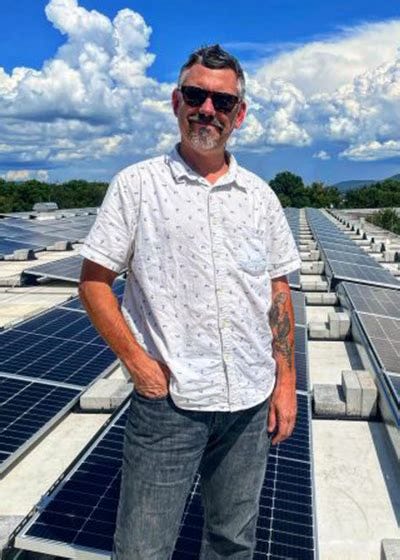
Portney was joined in a similar critique by Millheim Borough Council member Robert Zeigler who touted the Millheim Borough array at its wastewater treatment plant. Zeigler--not for the first time--stated that State College Borough could develop solar-powered microgrids. He—and again, not for the first time—invited people to come and see the Millheim project. The potential for solar microgrids has been investigated by State College, as was confirmed by State College Manager Tom Fountaine on Friday. Over the last few years, they have assessed building assets for rooftop solar. Their parking garages cannot handle solar canopies. State College government also lacks land for significant generation. In 2020, we determined rooftop power generation across the SPPA working group would not yield a price point nor generated power that was competitive with a utility-scale project. Millheim’s project was not helpful to us.
I would be remiss not to say that Zeigler bombarded the working group’s members with intrusive Right-to-Know requests. My text messages and emails were published online. He speculated that I was going to take a job with Prospect 14. I have not and will not. He accused me of violating the Sunshine Act, despite the fact the state’s office that handles these matters ruled in my favor. He and McCartney accused the working group’s members and me of circumventing an approval process through retroactive approvals. The accusations regarding employment, self-dealing, and retroactive approval are projections of his own experience as Right to Know requests revealed. Suffice to say, the Millheim project might have lessons Zeigler did not intend us to learn. People across our local governments know.
School Board director Amy Bader stood up for our process. She said, “The intimation that something nefarious happened or any other kinds of commentary, I think is really hard to stomach when this number of people have been involved. Individuals involved have changed and yet the decision has still been made to move forward. And I think that was grounded in legitimate benefits and intents to help the community and to benefit our society and to save taxpayer dollars in the long run.” Said another way, their accusations say everything about them and nothing about us.
I’ll close by reinforcing what Randy Brown told the media. Our goals were to meet financial and sustainability goals. And even though this project will not be completed, the cause remains. The public desire to tackle climate change is rising. Data center demand and grid resilience will drive creative solutions. Budget stress will require a response. This region wants more solar energy. Fortunately, the knowledge, skill, and willpower to do so is thriving in our local governments.
The result may not be what we hoped for, but the last six years have shown us an how valuable intergovernmental work can be. As Brown said, “No doubt, the relationships and connections that have been made will continue and make our collective work better in the future.”
https://thehill.com/policy/energy-environment/5131169-energy-transition-renewables-solar-natural-gas/?fbclid=IwdGRjcAQSLAVleHRuA2FlbQIxMQBzcnRjBmFwcF9pZAo2NjI4NTY4Mzc5AAEe46AsKLphVqv6uFDvuDavBOQLrqUSJDKKuumcELPE77cSssOhCcYxsI1hFo4_aem_qx5yQ98RwfLuZCecRkcTiQ